


About the Contributor
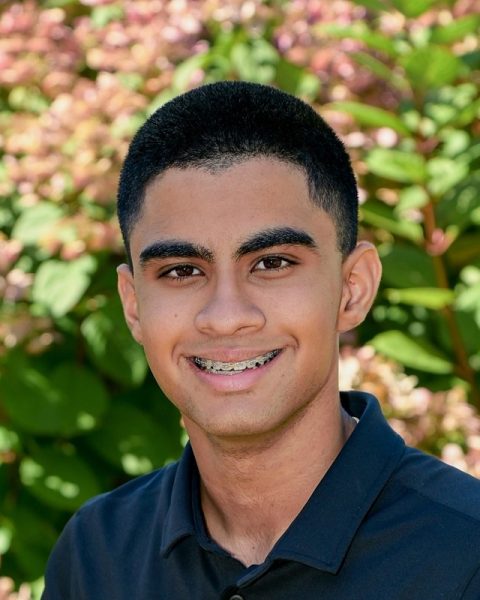
Rohan Muni, Opinion Editor

Posted Monday. March 2 at 11:15 a.m.
As missiles fly over the Middle East, The Gator interviewed three high-schoolers in the region last weekend, who shared their experiences living under Iranian strikes.
The first witness, Slaiman, is from Kuwait City, Kuwait. He saw the missiles firsthand near his home, and even recorded footage: “We’ve seen multiple missiles in the air”, Slaiman said, “and we have family and friends that have had shrapnel fall into their homes.”
Luckily, his family and friends were unhurt. Slaiman was at his home when the attacks started.
The strikes were unexpected, and everything changed very quickly: “I was doing an online class, and we just randomly started hearing explosions,” Slaiman said.
After the initial explosions, the city’s air raid sirens turned on, only adding more panic and confusion.
The explosions also caused his house to shake: “We had windows shaking and then we went outside and saw some smoke,” Slaiman said.
Slaiman and his family remained calm but stayed on the ground floor of their home to seek shelter. During this time, a shelter-in-place order was enforced.
The next week, Slaiman’s school was cancelled for the first two weekdays.
Slaiman has stayed calm and optimistic throughout his difficult experiences, and he hopes for a benificial regime change in Iran that brings peace in the region: “With the changes of leadership, it’s hopeful that the region will become a safer and more stable place,” Slaiman said.
Posted Monday. March 2 at 11:20 a.m.
Posted Sunday, March 1 at 6:45 p.m.
The second witness, Omar, lives in the United Arab Emirates, in Dubai. He himself did not see any missiles, while some of his friends did.
As strikes escalated, he received emergency alerts on his phone: “One was about the missiles, and the second one was about shrapnel,” Omar said.
His day on Saturday did not change significantly, although a family event was disrupted by travel restrictions: “We were planning to go today for, you know, like our annual family barbecue,” Omar said.
However, his family members were in Abu Dhabi, and no one was allowed to come into the city at the time. Omar’s family instead opted to go to an aunt’s house for lunch. Since the start of the conflict, Omar has remained calm, and has kept a resilient attitude.
He believes that because others in the world are suffering far more than him, it is unfair for him to complain: “Other people have been suffering way more than we have, and I’m complaining about things that I haven’t even seen happen,” Omar said.
The third witness, who requested anonymity, lives in a rural town in the United Arab Emirates along the border with Oman.
While they only saw the missiles briefly, their friends, who were at a conference in Abu Dhabi, saw smoke from missile interceptions: “There was a bit of smoke and so that’s kind of the majority of what was seen, but thankfully the government has everything under control,” they said.
When the Saturday attacks started, they said that not much had changed in their daily life— aside from a brief shelter-in-place order.
The witness cited the country’s trust in their government and faith in God.
“Here, we trust our government, and we put our trust in God, so to be completely honest with you, nothing was changed,” they said.
The witness also emphasized the sensational nature of media coverage.
“When you see the media, you’re like, oh my god, this happened, that happened, but they don’t show you everything that’s to be seen,” they said.
Amidst the conflict, the witness’s father still went to work like usual, a decision that, for the witness, was a demonstration of emotional control amidst the conflict: “I asked him, ‘Oh, are you going to work’?”, the witness said, “and he said, ‘I’m gonna be the first one there. I’m not gonna let these people stop me from going to work.”
After the interview however, the witness learned that their school would be online for the first three days of the week due to the uncertainty surrounding the conflict, a move that the witness described as “for the better”.
Editors’ note: This story was updated Tuesday, March 5 to include written reporting, concluding the breaking coverage.