







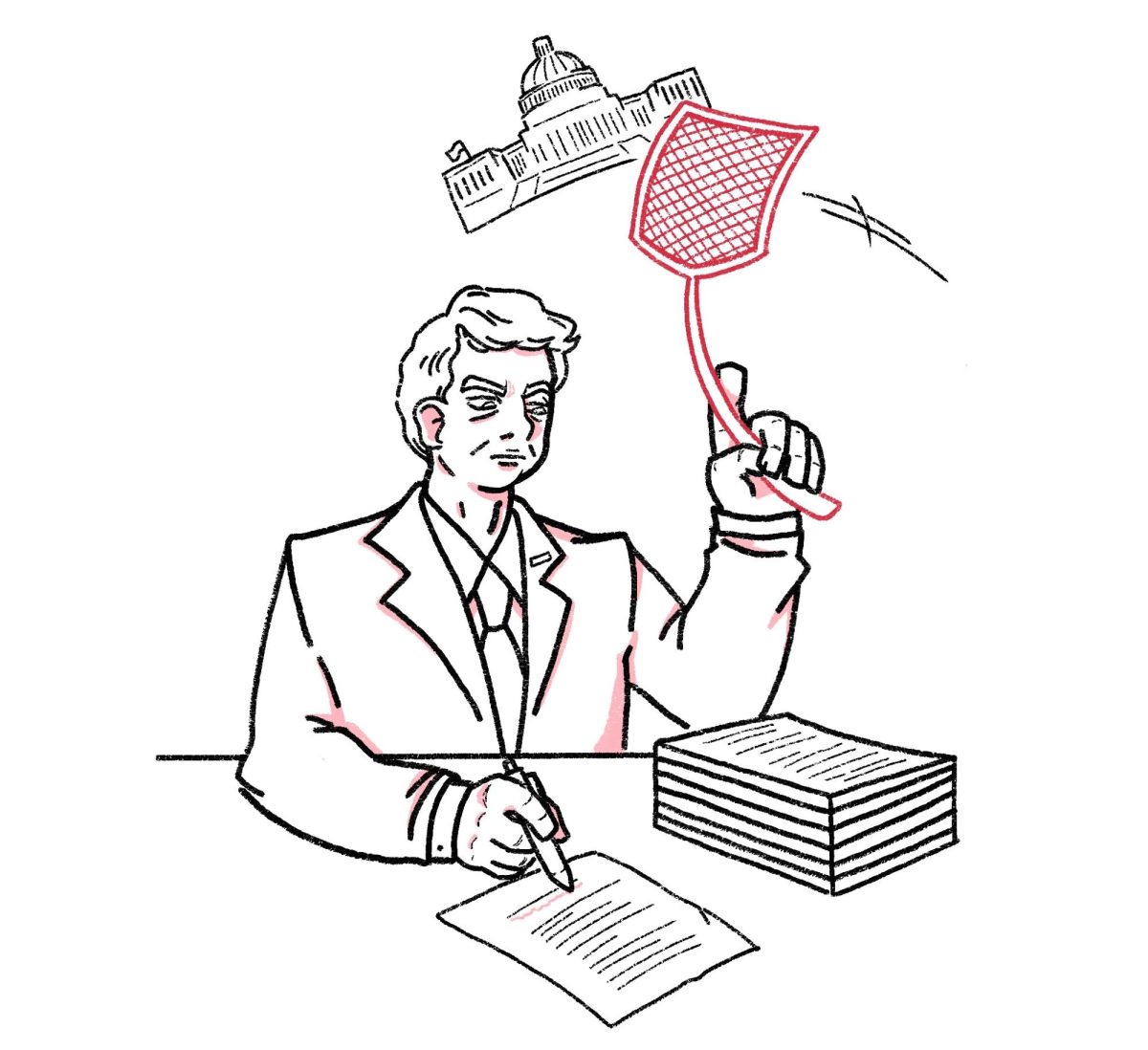




AP English Language and Composition, taught by English Department Chair Donald Reese, challenges students to see rhetorical writing in a new way. Unlike traditional English classes that focus on fiction reading and annotations, AP Language puts emphasis on the rhetoric and persuasion of the world.
“Probably the biggest difference is that we read non-fiction texts and talk about language and persuasion,” Reese said. “It’s not just about literature that helps you develop a rich inner life—it’s about how to use language to persuade people.”
The class begins with The 1619 Project, a reflection of U.S. African American history.
“It’s a good way to talk about the things people argue about, and how persuasion works in real life,” Reese said.
Throughout the year, students engage with a variety of readings and projects that hone their analytical and writing skills. One of the most popular books, There There by Tommy Orange, talks about the lives of Native Americans in modern America.
According to Reese, another memorable assignment was Walt Whitman’s Crossing Brooklyn Ferry, where students designed social media campaigns to spread the poem’s message of unity.
“Students created posters, PowerPoints, and other media to show how the poem’s themes still matter today,” Dr. Reese said. “It went really well.
According to AP Language Student Jerry Li ’27, the class atmosphere is engaging and thoughtful.
“Dr. Reese is a very interesting guy,” Li said. “The class is usually more casual. We do things like Points to Ponder, where we read, find two passages, and write about the context, the quote, and our thoughts. Sometimes we do AP practice questions or work on book projects.”
While students describe the workload as lighter than in other AP classes, they say the course still demands substantial critical thinking.
“There isn’t a lot of workload, but to really advance, you have to think deeply,” Li said. “It’s less about memorization and more about understanding.”
Li also appreciates how AP Language connects to other subjects, especially United States History.
“When we read The Scarlet Letter, I learned more about the Puritans, which helped me in history class,” Li said. “It made me see things from multiple perspectives.”

One thing that often surprises students is Reese’s teaching style. The self-graded style of his class creates a unique learning experience.
“He’s not just a teacher—he’s also a philosopher,” Li said. “He likes philosophy, especially Hegel and Socrates, and he brings that way of thinking into class discussions.”
Reese also focuses on student independence through his self-grading system based on participation and consistency. Most work is graded for completion, but missing assignments affect how high students can grade themselves.
“If you miss two Points to Ponder, you can’t give yourself higher than a C,” Li said. “But if you submit everything, write both essays, and go to the Writing Center twice, it’s easy to get an A.”
By the end of the year, Reese notices substantial improvements in his students and their knowledge for the May 13 AP exam.
“They gain a lot more confidence in their writing,” Reese said. “The sheer amount of practice really helps them prepare for the exam.”
For students considering AP Language, Li offers one simple advice: come prepared and don’t underestimate the class.
“Be ready with strong vocabulary and writing skills,” Li said. “It’s not as easy as people say—it really pushes your thinking.”
Reese agrees.
“Check out AP Lang,” Reese said. “It’s really interesting.”


Edan Z. • Nov 19, 2025 at 3:58 pm
Hey, I took that picture of Coffeehouse, not Caleb (although he’s great!)
adviser • Nov 20, 2025 at 8:48 am
Edan,
We are so sorry! We’ve made the change; do you us to also make a formal correction? We certainly will.