







|
Getting your Trinity Audio player ready...
|

In a world that’s dominated by digital cameras and instant filters, Darkroom Photography provides a quiet but powerful experience, one that Julie Williams-Krishnan, Photography teacher at the School, believes to be very important.
Speaking about the unique value of the class, Williams-Krishnan said she hopes students come to appreciate the hands-on nature of photography.
“I hope [my students] gain an appreciation for being engaged with something manually, physically stepping away from the digital world,” Williams-Kishnan said.
For her,
Darkroom Photography involves a series of specific chemical processes to turn film negatives into physical prints. Each step, from exposing the photographic image to light-sensitive paper, to developing, stopping and fixing the image, requires focus, precision, intuition, and creative adjustment.
Even the smallest mistake can alter or ruin a photo, requiring the artist to start all over again.
The experience engages all the senses: working under the red glow of the safe-light, the faint scent of chemicals, the hand-feel of the wet work, and the anticipation of waiting for an image to appear in the tray. For many photographers, that sensory connection is what makes the art form meaningful.
“[You learn] how to develop the image in a way that really is beautifully balanced and pristine, but it takes a lot of patience,” Williams-Krishnan said.
Caleb Meranus ‘26, an avid Darkroom Photography student, highlights the importance of time, creative adjustment, and intention when taking photographs.
-
Caleb Meranus ’27.

-
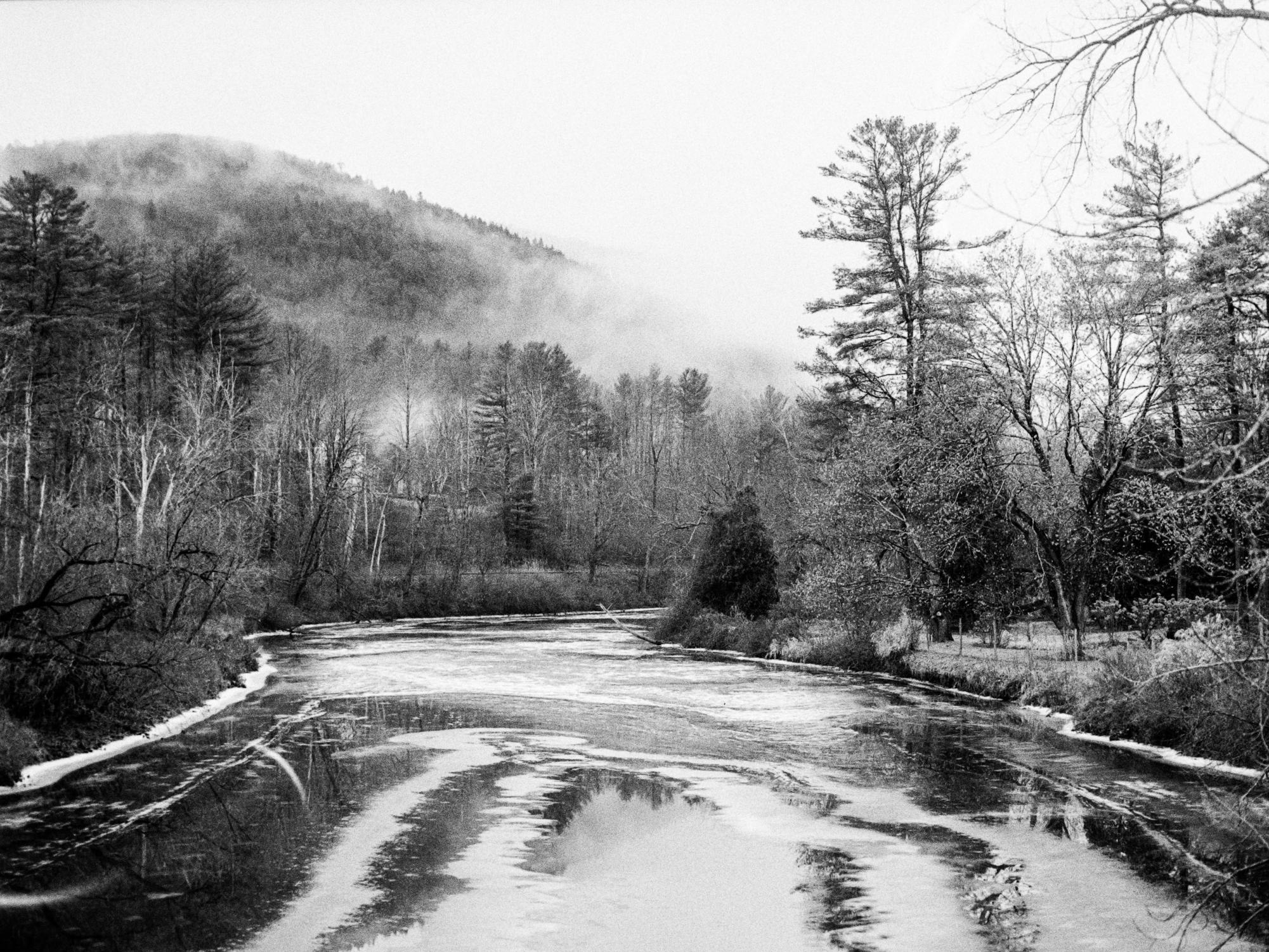
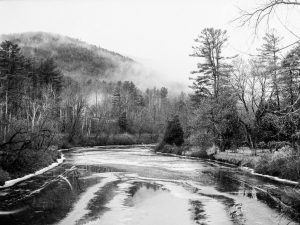
Caleb Meranus ’26: “This picture is a personal favorite of mine. It was shot on medium format film and developed and printed using the Brimmer Darkroom. The process of taking it from a negative to a finished print involved making a contact sheet to evaluate the roll of film, then printing this image on 8×10 photo paper to ensure that it was of the quality and contrast I wanted. Finally, I printed it on 11×14 paper. It took a few tries on the 8×10 paper, but once I had the desired contrast nailed down it was easy to blow up to 11×14. From develop to final print, this probably took around 3 hours to complete.”
-
Darkroom Photogrpy teacher Julie Williams-Krishnan,



“I am able to put in effort and remove the simplicity from the process of taking a picture, which to me means that the end product is more valuable and rewarding,” Meranus said.
Working in the darkroom also offers valuable technical lessons in exposure, contrast, and composition skills that improve a photographer’s technique and creative process, rewarding both patience and precision.
Everything takes multiple attempts, so patience [is very important],” Meranus said.
Instead of instant gratification from snapping and filtering photos, the darkroom invites students to slow down and enjoy the beauty of creating something by hand.