




|
Getting your Trinity Audio player ready...
|

The School’s most recent Outdoor Education trip stayed true to tradition while also marking an exciting shift for the program. On February 14, students traveled to Bald Peak in the White Mountains of New Hampshire, a new yet exciting adventure where snow and mountain views set the stage for a weekend of challenge and connection.
According to longtime leader and Upper School History Teacher Ted Barker-Hook, the heart of every trip remains the same: hiking, disconnecting from daily life, and building community.
“In many ways, all of our trips are very, very similar. We mostly focus on hiking,” Barker-Hook said, emphasizing that the simplicity of walking together through nature creates space for meaningful conversation and shared experiences throughout each student.
Like many past excursions, the group stayed in a hostel, where students took on leadership roles beyond the trails. With a set budget, they worked together to shop for groceries, cook dinner and breakfast, and clean up afterwards—an intentional part of the program that encourages responsibility and teamwork.
Rather than simply participating in planned activities, students actively contributed to making the weekend run smoothly, strengthening both independence and collaboration.
What made this trip especially notable was the group itself. Of the 12 students who signed up, seven had never attended an Outdoor Ed trip before. For the first time in recent years, students from every Upper School grade level were represented.
Barker-Hook described this as particularly meaningful for the program’s future.
“It was really exciting for me to get some new blood,” he said, noting that seeing younger students step outside their comfort zones reassures him that Outdoor Ed will continue to thrive in the years ahead.
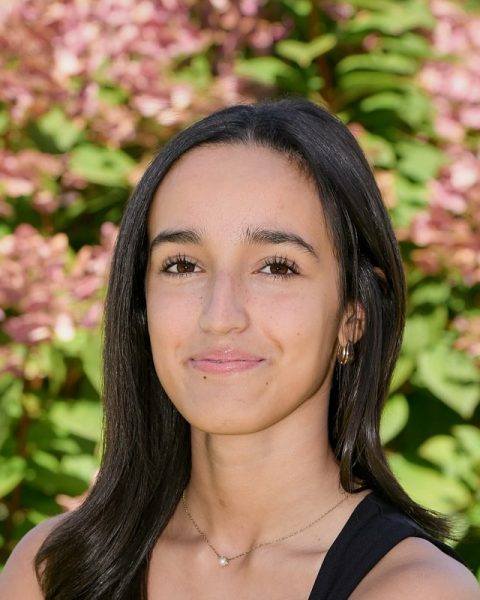
Among those first-time participants was Maria Calanca Freire ’29, who described the experience as both challenging and rewarding.
“This was very out of my comfort zone,” Freire said, especially as someone who does not enjoy the cold. Yet she viewed that discomfort as part of the opportunity. She explained that the trip was “a good opportunity to be away from my phone and be around new people,” including upperclassmen she might not otherwise have connected with if it wasn’t for this trip.
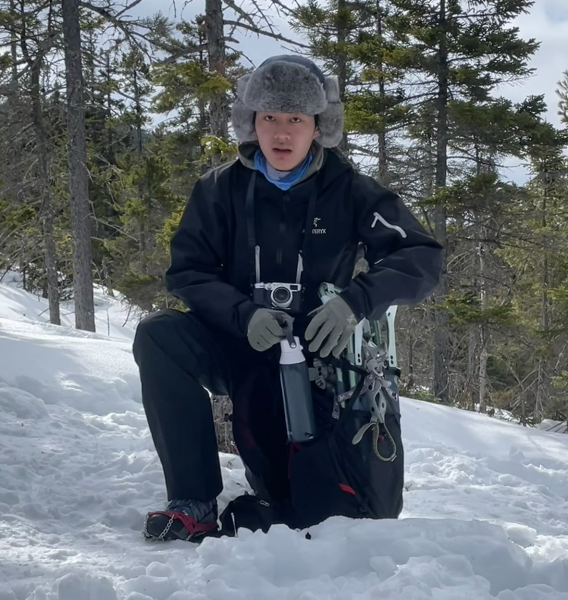
For Freire, the chance to unplug and engage fully with her peers became one of the most valuable aspects of the weekend.
Even downtime became a meaningful part of the experience. After cooking pasta together, students gathered in the evening to play Monopoly, an activity that might have been overlooked if phones had been allowed.
“Normally when people have downtime, they go on their phones,” Freire said. “But since we didn’t have our phones, we all got together and played Monopoly. It was so much fun.”
The hike itself, though initially challenging, turned out to be one of the groups’ favorite memories. Despite the snow and cold weather, the group hiked up to a beautiful summit.
Though Freire felt nervous at the start, she reflected on her experiences during the hike.
“The view was beautiful, and it was just such a great experience,” Freire said.
Over its 28-year history, the Outdoor Ed program has evolved. Skiing, canoeing, whitewater rafting, and rock-climbing trips have come and gone, often due to cost, safety considerations, or a desire to focus on unplugged, nature centered experiences away from technology and stress.
While specific activities may change, the philosophy behind the program remains consistent. One tradition that has never changed is the goal of disconnection. This year, Barker-Hook returned to collecting students’ phones, reinforcing what he says has “always, always, always been the goal to get kids to disconnect.” Many participants, including Freire, appreciated the break from social media and the chance to be fully present.
Music on the bus also remains a staple, culminating every trip with “Somewhere Over the Rainbow/What a Wonderful World” by Israel Kamakawiwoʻole as the bus drives up Route 9, timed in a long running tradition to end just as the bus pulls into the parking lot.
When the timing is perfect, Barker-Hook says, it adds one final shared smile to a weekend built on challenge, connection, and community. For both seasoned participants and first-time students like Freire, the trip to Bald Peak was more than a hike—it was a reminder that growth often begins just outside one’s comfort zone.
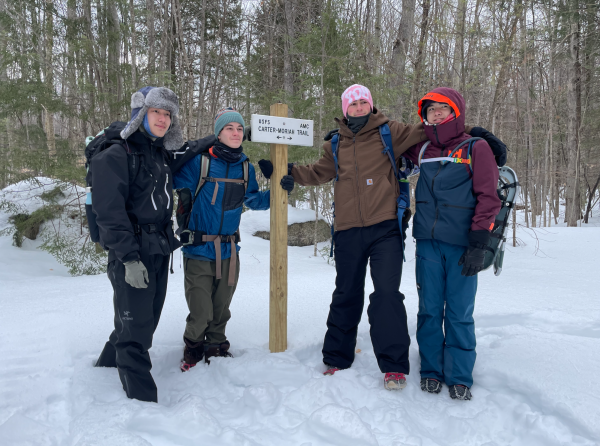
Edward Flint ’26 explained the benefit of Outdoor Ed on the School’s community.
“Outdoor Ed is one of those special things where you never truly realize how amazing it is until you try it out,” Flint said. “Adventuring, going outside of your comfort zone, and experiencing change, while seeming scary, is something that will always shape who you are and give you amazing memories.”
Editor’s note: Edward Flint ’26 is the Editor-in-Chief of The Gator.