

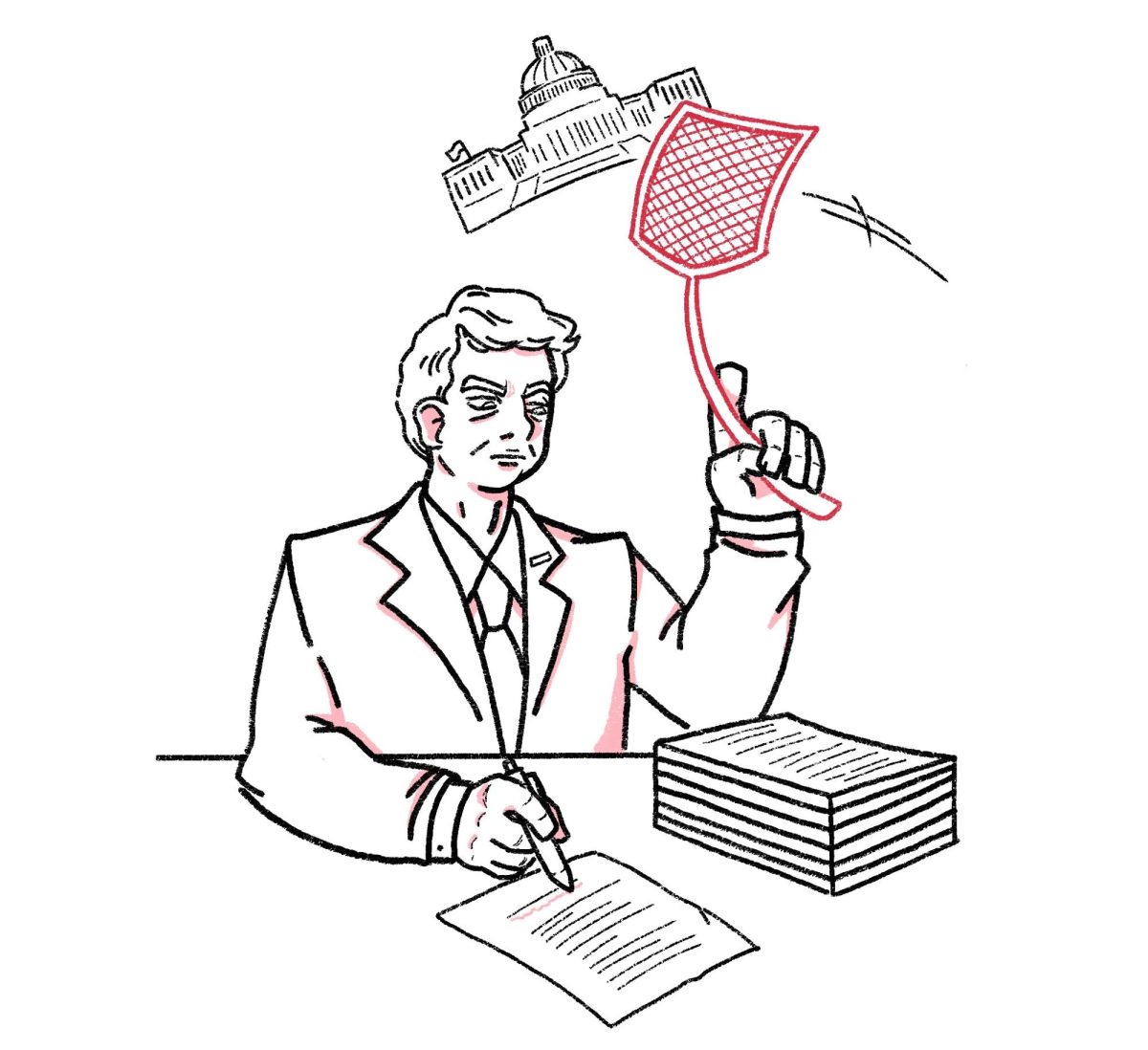



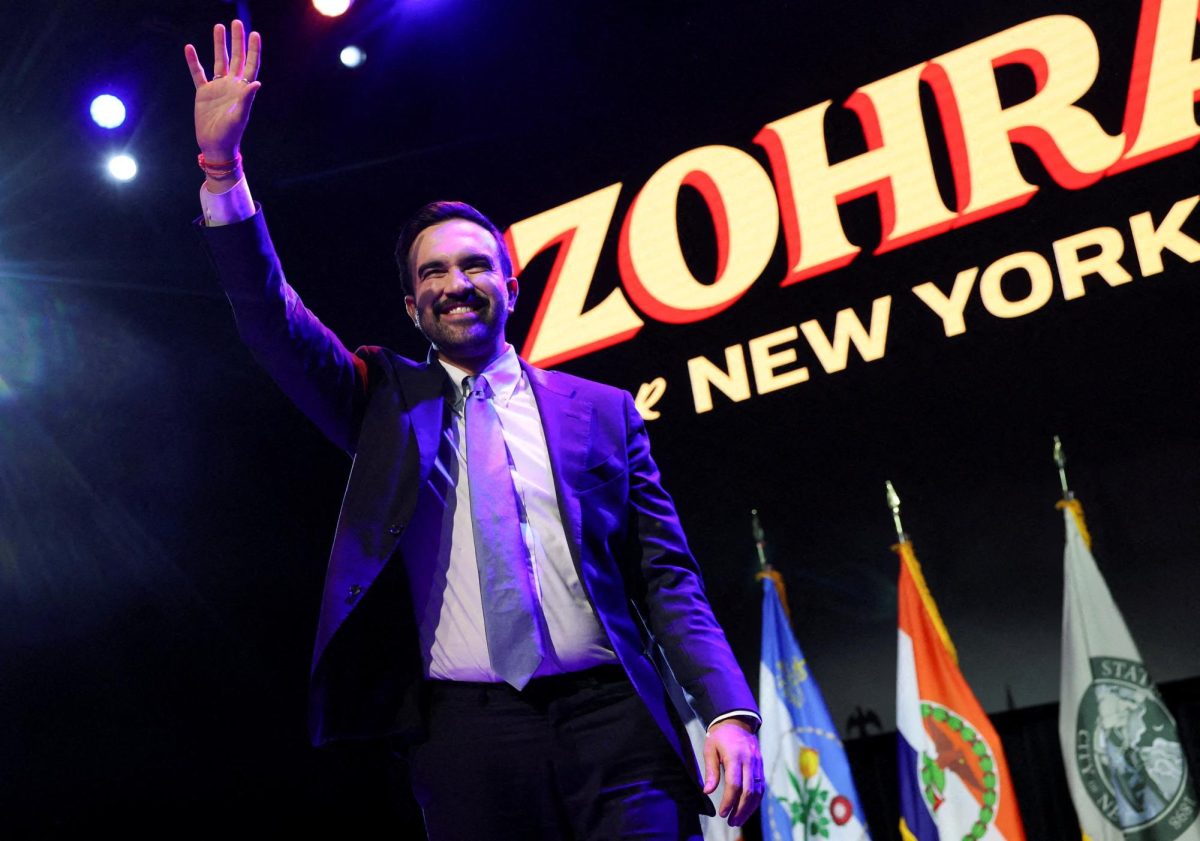
The recent election of Democratic Socialist Zohran Mamdani as New York mayor raises a central question: Will his left-wing policies improve life for city residents, or are they simply dreams that will not work in reality?
Mamdani did not win despite his policies, but because of them. Many New Yorkers strongly support his proposals to freeze rents and raise taxes on the wealthy, believing these steps will make the city more affordable and equitable.
His tax policies were the most popular among the voters in the five boroughs. Their support for him stems from the city’s extremely high rent prices, with a median apartment costing roughly $3,600, and New York consistently ranking as one of the top ten most expensive cities in the United States.
As a populist candidate, Mamdani has centered his campaign on supporting middle- and working-class communities. Despite his sharp anti-billionaire, anti-elite rhetoric, his support has been relatively consistent among income levels. Still, it’s no surprise that many billionaires are alarmed by his rise. Before the election, New York’s wealthiest residents collectively donated $22 million to his opponents, hoping to block his socialist agenda.
One thing that is clear about Mamdani, regardless of what one thinks of him, is that he is bold and refuses to back down, even under harsh criticism. When billionaires called him an existential threat, he simply replied, “They are right.”
Even while running as a Democratic Socialist on Wall Street, the headquarters of capitalism, he has never backed down and, in turn, has gained the city’s support. However, while Mamdani possesses remarkable courage, having courage is not enough to become an effective and net-positive leader. Mamdani has good intentions, but his populist ideas have many holes.
While Mamdani’s proposal to freeze rents may sound appealing, it risks undermining future development. Many landlords rely on rental income not only to maintain and improve existing units but also to finance new housing projects. A rent freeze might offer tenants short-term relief, but it could discourage investment, reduce housing quality over time, and ultimately carry costly long-term consequences for the city.
Mamdani’s aim to create government-run grocery stores is to make food more affordable for New Yorkers.
“For far too many New Yorkers, groceries are out of reach,” Mamdani said to reporters earlier this month.
However, his plan to create these grocery stores is ultimately impractical in principle. While he says their purpose is to help residents by offering lower prices, these stores would quickly outcompete many privately run businesses.
Even if food becomes more affordable in the short term, the likely result would be serious harm to New York’s delis, bodegas, and independent grocery stores—a massive economic and cultural loss for the city.
Since the government-run grocery stores will not need to make a profit, the owners will be less motivated to keep the stores in satisfactory condition.
Mamdani’s proposal for free bus rides would also strip funding from efforts to maintain and improve the system. He has even claimed that, alongside eliminating fares, the transit system would become faster. In reality, it is hard to see how a system losing revenue could simultaneously speed up service and invest in needed upgrades.
The top ten percent of New Yorkers account for two-thirds of the city’s tax income, and for Mamdani’s goals to materialize, he needs significant tax payments.
Mamdani’s push to impose harsher taxes on corporations risks driving many of them out of the city.
Such an exodus will shrink the tax base and weaken the job market. Reaching his goals is also more difficult than it appears, since he still needs the wealthy to accept, or at least tolerate, his policies—something that seems increasingly unlikely. Populism overlooks this reality: meaningful progress in New York depends on maintaining a strong high-income tax base.
On election night, however, many voters overlooked these key issues. Swept up in excitement over his promises, they focused more on hope than on realistically questioning the consequences. This pattern is nothing new—we have seen it play out countless times before.
The support for Mamdani interestingly mirrors someone on the opposite side of the political spectrum: President Donald Trump.
While these two disagree deeply and have completely different ideologies, they have both run as populists and persuaded people in similar ways.
In 2016, Trump campaigned on a promise to help the average American, vowing to bring back jobs by punishing companies that moved work overseas. Many of his strongest supporters came from towns that had been hit hard by late 20th-century globalization.
Like Mamdani, Trump campaigned as an outsider challenging the establishment, though he focused more on government institutions than on wealthy corporations. He has not delivered on most of his promises, yet his rhetoric and charisma have helped him retain support. The same is true for Mamdani, who has used social media to craft an appealing public image for New Yorkers.
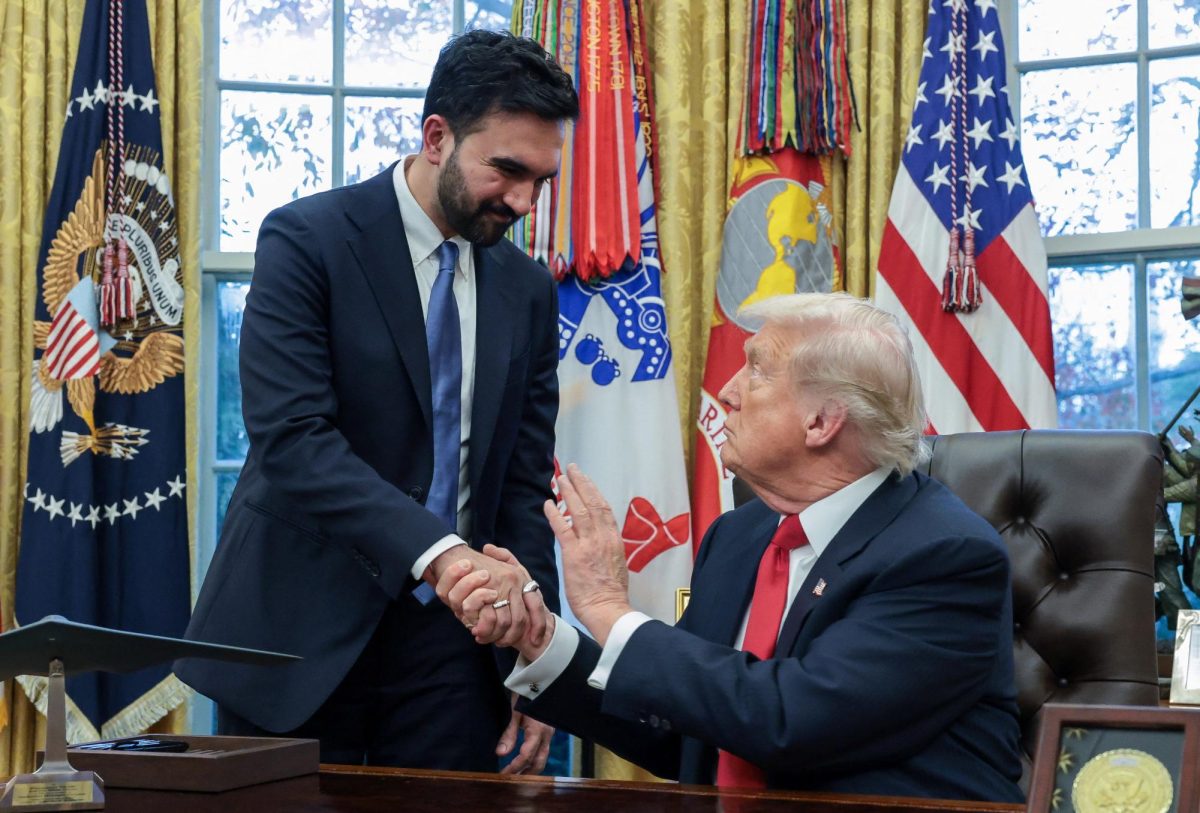
During their meeting at the White House on Friday, November 21st, Mamdani and Trump remained cordial, even as they held firm to their disagreements.
The two have sparred in the past: Trump once threatened to defund the city if Mamdani won, while Mamdani aimed to “Trump-proof” New York. Yet after their meeting, Trump offered unexpected praise, and Mamdani described the conversation as productive. Trump even said they agreed on more than he anticipated and that he would feel comfortable living in New York under Mamdani’s leadership.
The surprising outcome of the meeting underscores how similar their political styles and strategies are. In addition, both began as unlikely candidates, yet their sweeping promises carried them to victory while voters overlooked serious flaws in their plans.
Their elections show that populism, even when built on unrealistic ideas, can still attract broad support.
For voters, the lesson is clear: it is not enough to like a politician’s ideas—you also have to ask yourself how they will put those ideas into practice and at what cost. Mamdani may have seemed like an easy choice on the ballot, but his policies are likely to bring serious unintended consequences for New York City.